Liberia's Billions Lost to Foreign Miners
The Exploitation of Liberia's Mineral Wealth
Liberia is facing a significant loss of potential revenue as foreign mining companies continue to extract vast amounts of mineral wealth with minimal returns to the country. This issue was highlighted by legal experts during the recently concluded Liberia National Bar Association (LNBA) Annual Convention in Ganta, where concerns were raised about the mismanagement of the nation’s natural resources.
Cllr. Marck M. M. Marvey, delivering the keynote address on the theme "Strengthening the Rule of Law: The Lawyer's Role in Restoring Public Trust," emphasized that Liberia's extractive sector remains one of the most poorly managed in West Africa. Despite decades of exploitation by multinational corporations, the country has not seen the expected economic benefits.
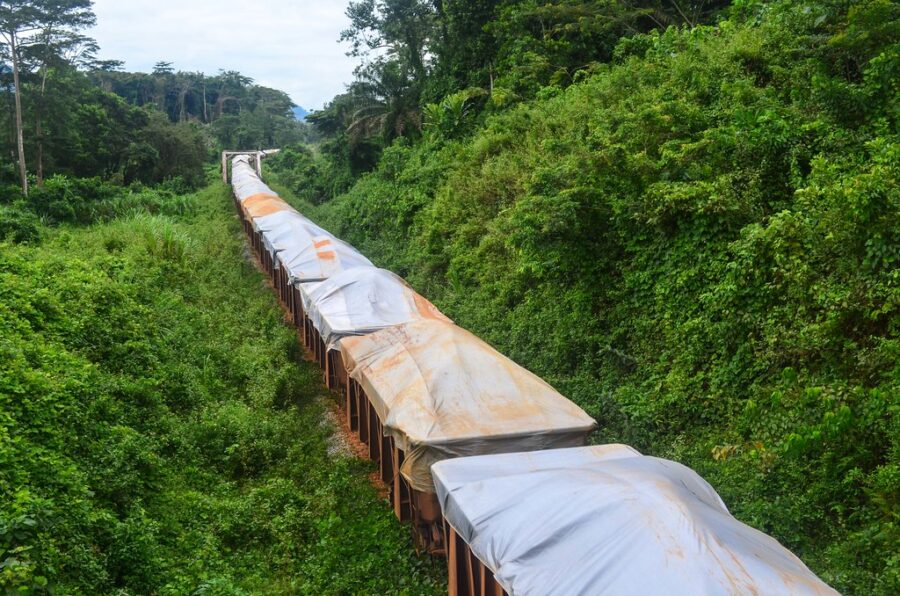
Marvey cited alarming figures from the Liberia Extractive Industries Transparency Initiative (LEITI), revealing that ArcelorMittal Liberia (AML) generated over US$1.21 billion between 2009 and 2022, while the Government of Liberia received only US$138 million—approximately 11 percent of total revenue. He pointed out that unprocessed iron ores are shipped out of Liberia, and other minerals such as gold and diamonds uncovered at AML's plant are also exported without proper reporting.
Legal Loopholes and Their Consequences
Marvey called on Liberian lawyers to "identify and close loopholes" in concession agreements, stressing that the legal community has a responsibility to prevent the perpetual exploitation of Liberia's natural resources by foreign corporations. He argued that these loopholes allow foreign companies to dominate the mineral sector at the expense of the country.
The situation in Yekepa, once envisioned as a model mining township, illustrates the neglect faced by local communities. Despite over 20 years of mining activity, the area remains in ruins, with housing camps overgrown, alleyways and public spaces dilapidated, no functioning pipeborne water system, and portions of the Mount Tokadeh railroad damaged. The mini-dam and several essential facilities are abandoned, raising concerns about the long-term impact of mining activities.
Carbon Credit Sector and Mining Licenses
Marvey also highlighted the poor regulation of the carbon credit sector, noting that Liberia currently has no comprehensive carbon trading law. Only a Revenue Code provision requires 10 percent of carbon credit proceeds to be remitted to the Liberia Revenue Authority. Customary communities receive minimal benefits, and foreign companies operate freely without a standardized framework.
The extension of the Bea Mountain Mining Company (BMMC) concession was another point of criticism. Royalties were reduced from 10% to 5%, environmental oversight was weak, and contributions to the Community Development Fund were minimal. Despite these failures, the government approved the extension. According to the 15th LEITI Report, BMMC exported 11,046 kg of gold valued at US$576.4 million in 2021/2022 but contributed only US$33.98 million—just 26.12%—to state revenue.
Class A and Class B mining licenses also present challenges. Foreigners exploit Class B licenses without requirements to form local companies or add value. Class A license holders for iron ore can ship other minerals—including gold and diamonds—with minimal oversight.
Historical Context and the Resource Curse
Liberia's struggle with mining exploitation is not new. Since the 1950s, a pattern of unequal partnerships with foreign corporations has undermined national development. Companies like LAMCO, Bong Mining Company, and China Union have all left behind negative legacies, including impoverished communities, decaying infrastructure, and environmental damage.
Economists describe this as the "resource curse"—a paradox in which countries rich in minerals remain poor due to structural dependency, corruption, and weak negotiation capacity. Across administrations, the story remains the same: Liberia exports raw minerals, foreign firms reap the profits, and communities see little improvement.
Judicial Weaknesses and the Need for Reform
Beyond the extractives sector, Marvey criticized Liberia's justice system, arguing that weak institutions enable concession abuses to continue. He noted that the courts often favor wealthy and influential individuals, bribery limits access to justice for women and youth, and judges who challenge powerful interests are often reassigned. Sensitive cases are redirected to "pliable judges."
These judicial weaknesses make it difficult to enforce concession obligations or hold companies accountable. Marvey urged the legal community to take a more assertive role in protecting Liberia's mineral wealth. He recommended that no foreign company should operate without allocating at least 20% ownership to Liberians, concession agreements should prioritize value addition and local processing, and communities must receive fair compensation—either through royalties or direct equity.
A Call to Action
"The legal profession must be a check against exploitation—foreign or domestic. Lawyers must reform concession agreements, protect citizens' rights, and strengthen the rule of law," Marvey said. He emphasized that the legal community has a crucial role to play in ensuring that Liberia's natural resources benefit its people.
Liberia stands at a critical moment. The minerals that have fueled foreign profits for nearly 70 years could, if properly managed, transform the nation's economic trajectory. However, without a stronger legal framework, empowered communities, and a justice system that protects the national interest, Liberia risks repeating the same historical cycle. The need for action is urgent, and the legal community must rise to the occasion to safeguard the country's future.
Posting Komentar