Kenyan CEO's Journey: From One Shop to KSh 6b Revenue Success
A Legacy of Growth and Innovation
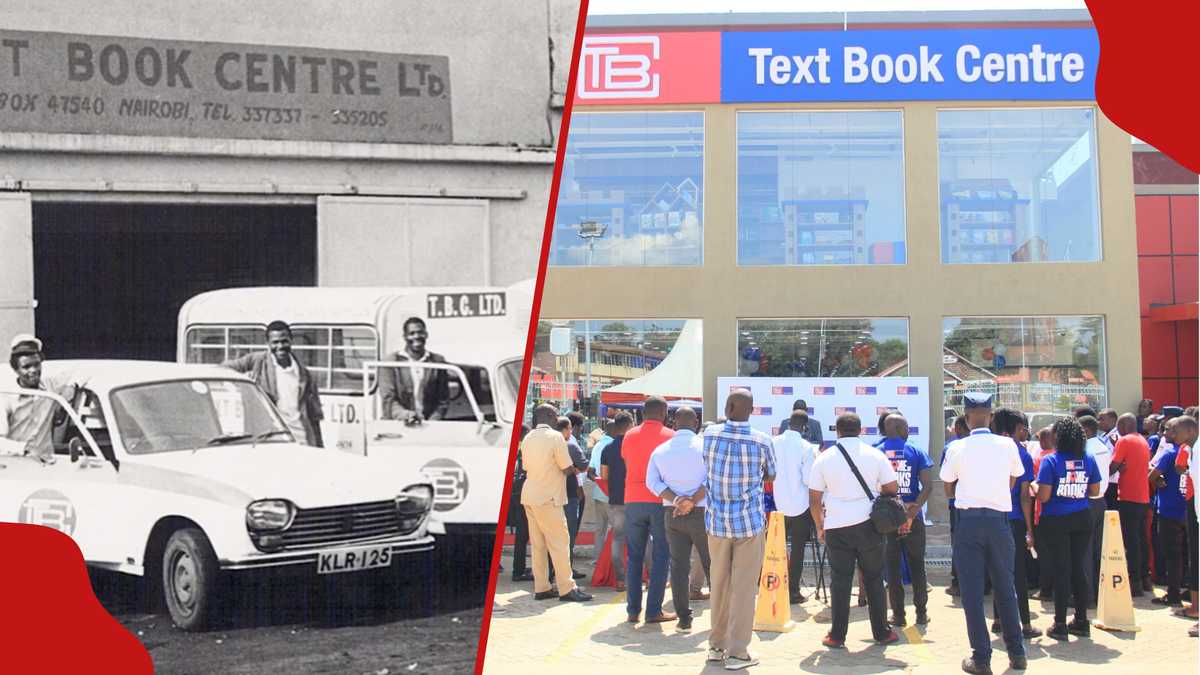
Text Book Centre (TBC) has become a prominent distributor of educational, cultural, and technological content in Kenya. Established over six decades ago, the company has evolved from a small partnership into a national retail powerhouse. Its journey began in 1964 when S.V. Shah and M.J. Rughani, two enterprising individuals, joined forces to create TBC. At that time, they operated separate bookshops in Fort Hall (now Murang’a) and Nyeri, but their shared vision led them to establish TBC on Kijabe Street in Nairobi.
The Kijabe Street headquarters, which was set up in 1965, continues to serve as the company’s central base. Over the years, TBC has expanded significantly, opening its 15th branch in Eldoret in November 2025. The CEO, Sachin Varma, discussed the company's remarkable growth in an exclusive interview, highlighting how TBC has become a trusted partner for students, educators, and institutions across the country.
From Independence to National Retailer
The establishment of TBC occurred just one year after Kenya gained independence from British colonial rule. President Jomo Kenyatta emphasized education as a critical factor in overcoming ignorance, poverty, and disease. This focus on education created a significant business opportunity, and Shah and Rughani were motivated by a mission to provide quality educational materials at affordable prices.
By merging their individual shops, they created a centralized hub for textbooks and learning resources, ensuring that students and educators could access what they needed to build a literate and educated nation. In the early years, TBC built strong relationships with publishers and educational institutions, which became essential to its success.
A major milestone came in 1976 when TBC organized Kenya’s first public book fair at Uhuru Park. This event, which was free and open to the public, featured both international and local books, and it helped solidify TBC’s reputation as the go-to source for academic content. The success of this fair led to more events in cities like Kisumu and Mombasa, further expanding literary horizons for Kenyan readers.
Challenges and Turning Points
Despite its successes, TBC faced several challenges in its early years. One of the primary issues was the distribution of books from Nairobi to other parts of the country. Kenya’s infrastructure was still underdeveloped, making nationwide delivery difficult. Managing inventory for a rapidly growing education sector required innovative solutions, leading to the decision to anchor the national distribution base in Nairobi.
Key turning points in TBC’s growth included expansion into education hubs across Kenya, diversification into stationery, technology, and art supplies, and embracing digital transformation in the 20th century. These strategies enabled the company to evolve from a single store into a national retail chain.
Adapting to Change
Kenya’s shifting education system presented both challenges and opportunities for TBC. For instance, the transition from British-based curricula in the 1980s to localized curricula prompted the company to expand its product range. This shift led to a change in TBC’s slogan from “Supermarket for school supplies” to “much more than a bookshop.”
The digital transformation, which gained momentum around 2018, saw the launch of TBC’s e-commerce platform and the inclusion of tech products in its catalog. The COVID-19 pandemic further accelerated this shift, as remote learning and diverse curricula increased demand for online access to books and educational tools. Today, TBC’s online sales are growing at double-digit rates, supported by a mobile-friendly website, loyalty programs, online pre-orders, and curated digital experiences.
The Role of Physical Stores
Despite the rise of online shopping, TBC maintains that physical stores remain essential. Customers appreciate the sensory experience of browsing books, stationery, and tech products in person. The company has adopted a hybrid model, combining online and physical approaches to cater to a diverse customer base, including students, parents, educators, tech-savvy professionals, and creatives.
Cultural and Educational Spaces
TBC positions its stores as cultural and educational spaces through various activities and events. The company hosts author signings, book clubs, children’s art competitions, and creative workshops through initiatives like the TBC Kids Club. Eldoret’s newest branch at Rupa Mall exemplifies this experiential retail approach, featuring a tech zone, creative space, and a children’s learning area in collaboration with the mall.
The shift to Kenya’s Competency-Based Curriculum (CBC) and skill-based learning has also influenced TBC’s offerings. There is now greater demand for activity books, creative kits, and digital tools. While traditional textbooks remain core, the emphasis on practical skills has prompted TBC to diversify its products and prepare for future educational needs.
Vision for the Future
Looking ahead, TBC aims to be the leading book, stationery, and technology retailer in East and Central Africa by its 70th anniversary. The company’s strategy focuses on blending a strong physical presence with a digital-first approach, while also leading in e-learning solutions. This dual focus ensures that TBC can serve both traditional readers and a growing digital audience, maintaining its position as a key player in Kenya’s educational and cultural landscape.
Posting Komentar