Gov invests 700 trillion won in semiconductors
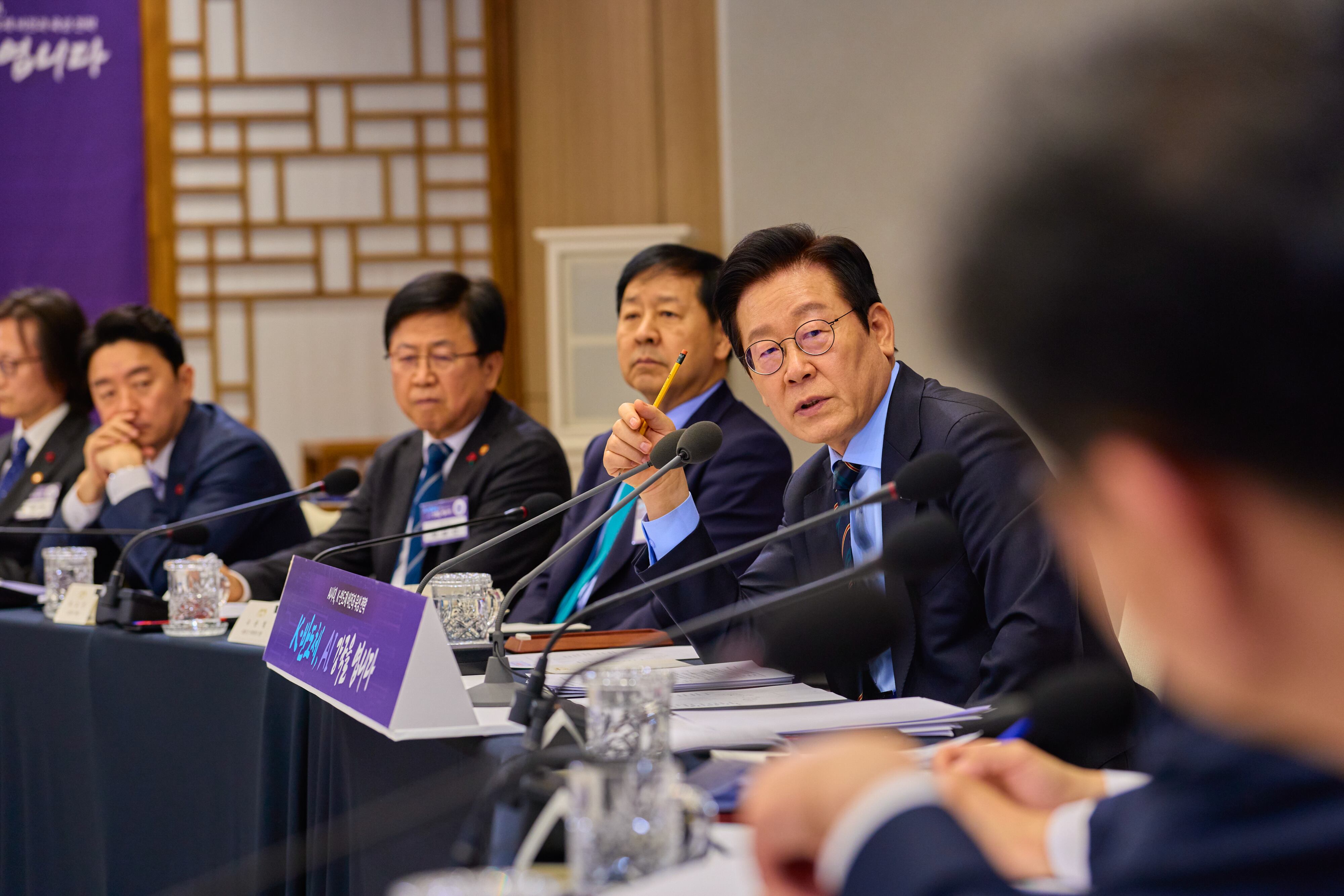
Government Launches Ambitious Semiconductor Strategy for AI Era
The government has taken significant steps to secure its position in the global semiconductor industry, declaring a nationwide effort to become the world’s second-largest semiconductor power. This initiative was announced during a meeting titled “Report on the Vision and Nurturing Strategy for K-Semiconductors in the AI Era,” chaired by President Lee Jae-myung. The strategy includes a massive investment plan of over 700 trillion Korean won by 2047, supported by the newly launched 150 trillion won National Growth Fund. This move underscores the urgency of maintaining competitiveness in an increasingly capital-driven global semiconductor market.
President Lee emphasized that the current market structure is dominated by the United States, with South Korea and Taiwan as key players. The U.S. holds core technologies and designs, while Taiwan specializes in foundry services and South Korea in memory chips. The government aims to maintain its lead in memory sectors while improving its weaker areas in fabless (design) and foundry capabilities.
To support these ambitions, the government is preparing measures to ease the separation of financial and industrial capital. This principle, which prevents conglomerates from owning banks, is seen as a barrier to large-scale investments in high-tech industries. President Lee acknowledged the need to balance this principle with the demands of the semiconductor sector, stating that practical measures are nearly ready.
Key Investment Plans and Industry Challenges
The government’s investment plans coincide with growing challenges faced by semiconductor companies. Major CEOs, including those from Samsung Electronics and SK Hynix, highlighted the increasing burden of investments due to AI expansion. For instance, Sam Altman of OpenAI requested 900,000 HBM wafers per month from Samsung and SK Hynix, exceeding their combined production capacity. This demand requires substantial investment, estimated at 50 trillion won.
Other global players like TSMC and Intel are also making significant investments in their respective regions. TSMC plans to invest approximately 243 trillion won in U.S. factories, while Intel announced 137 trillion won in European investments. These figures highlight the scale of competition and the need for coordinated national efforts.
Samsung and SK Hynix have secured large sites in Yongin, Gyeonggi Province, to build 10 advanced semiconductor factories. However, the initial investment estimates have increased significantly due to rising costs and inflation. SK Hynix now expects to need 600 trillion won for five semiconductor factories, far exceeding earlier projections.
Policy Changes and Financial Leverage
To address these challenges, the government is planning to relax the stakeholding requirements for great-grandchild companies, allowing them to hold 50% stakes in financial subsidiaries. This change would enable SK Hynix to establish a financial leasing subsidiary and lease factories from it. Additionally, the National Growth Fund may play a role in supporting these initiatives, focusing on AI and semiconductors with shared profit models.
Kim Jung-kwan, Minister of Trade, Industry and Resources, emphasized the government’s commitment to achieving the goal of becoming the world’s second-largest semiconductor power. By 2047, the government plans to invest over 700 trillion won to build 10 advanced semiconductor factories and expand the fabless ecosystem. A ‘win-win foundry’ initiative will also be introduced, enabling mid-sized fabless companies to produce and verify semiconductors at lower costs.
Regional Development and Workforce Concerns
Despite these plans, the government’s announcement omitted long-standing industry demands, such as exemptions from the 52-hour workweek system and nuclear power expansion. Instead, it focused on creating a ‘Southern Region Semiconductor Innovation Belt’ in Gwangju, Busan, and Gumi. This initiative encourages decentralization from the capital area, offering incentives like flexible working hours and expanded investment subsidies for local workers.
President Lee highlighted the potential of southern regions rich in renewable energy, aiming to build new industrial ecosystems there. However, the business community expressed concerns about workforce supply, particularly in areas south of Pangyo, Gyeonggi Province. Critics argue that the government is using industry pleas for extended working hours as a political lever for regional development, driven by voter sentiment.
Understanding Fabless Companies
A fabless company specializes in semiconductor design without production facilities. Production is typically outsourced to foundries like TSMC and Samsung Electronics. Tech giants such as Apple and Google, which design their own chips, are also considered fabless companies. This model allows for greater flexibility and focus on innovation, but it relies heavily on partnerships with foundries for manufacturing.
Posting Komentar