From Babcock to Boardrooms: How a Nigerian CEO Powers AI Success
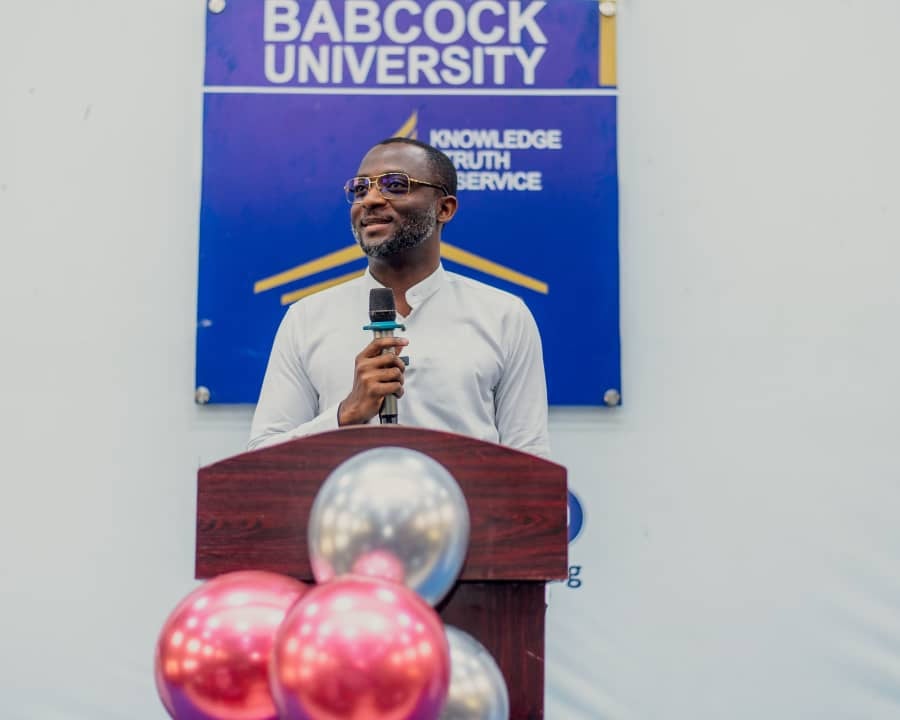
A Candid Conversation on AI in Nigerian Businesses
When the CEO of PressOne speaks about artificial intelligence, he doesn’t start with grand visions or futuristic ideas. Instead, he begins with a mistake. “We were about to hire 100 account managers. We had the job descriptions. We were convinced it was necessary.” He pauses, then adds, “The results were underwhelming.”
This kind of honesty is rare among CEOs. There’s no corporate jargon or polished messaging—just a founder willing to admit that even successful companies make costly mistakes, and sometimes those mistakes lead to unexpected breakthroughs.
The Experiment That Changed Everything
The story of how PressOne deployed Contextual Intelligence isn’t just about technology. It’s a story of desperation, curiosity, and the willingness to question assumptions that most people take for granted.
In early 2023, PressOne faced a common challenge for growing Nigerian businesses: an expanding customer base, increasing inquiries, and overwhelmed support teams. The conventional approach was clear—more customers meant more staff, and more complexity meant more account managers. Growth equaled headcount.
“We were following the playbook,” says Mayowa Okegbenle. “And the playbook wasn’t working.” Instead of hiring 100 people, the team built something called Juliet—a system designed to help customers complete the essential steps to get full value from PressOne’s product.
The name is deliberate, almost playful. Not “PressOne AI Assistant” or “Customer Success Bot.” Just Juliet. Like a person. “Juliet has saved us millions of Naira,” he says simply. “But that’s not the most interesting part.”
The Questions That Keep Needing Answering
What’s interesting isn’t just that Juliet works. It’s what her existence means for the future. “Was Juliet possible five years ago?” he asks, leaning forward. “How about two years ago?” He answers his own question: “No, she wasn’t.” The technology wasn’t ready. The language models weren’t sophisticated enough. The costs were prohibitive.
But then his tone shifts. “But that’s not the most important question. The most important question to me is: what is possible over the next three years?”
He poses questions that make you realize you’re thinking about the wrong things. “And the most important question to you,” he continues, “is how does this possibility impact you? Your career choices? The future of work?”
It’s a pointed question for a country where unemployment is high, and every new technology feels like a threat to scarce jobs. He knows this. He’s not dodging it.
Computer Used to Be a Job Title
To explain where we’re going, he takes me back to where we’ve been. “Before the invention of the first computer machine, ‘computer’ referred to a person who was trained to compute complex calculations. Computer was a job title.”
The first computer machine was invented to do that job faster. Then came software engineers who built programs for business productivity—calculating taxes, managing budgets, tracking inventory. “There was this tool called Visual Basic,” he says, and you can hear the nostalgia in his voice. “It was sold as Rapid Application Development. The promise was that anyone could build the software they needed.”
He pauses. “Here’s the question: Over the last 40 years, engineers have envisioned a future where anyone can build the tools they need, without needing a software engineer. Have all those efforts failed?”
It’s a rhetorical question, but also not. He’s genuinely wrestling with it. “With AI, would we finally arrive at the future where anyone can build the app they want? We all know about vibe coding. Is that it? Are we there now?”
The Uncomfortable Truth
He doesn’t think we’re there. Not yet. Maybe not ever in the way people imagine. “Those who have not been trained in these topics cannot solve complex problems with software,” he says flatly. “Not yet. Maybe not with current AI.”
This is the part where he loses some people. The part where the vision of democratized software development hits the reality of complexity, edge cases, and systems thinking. But it’s also where he gets interesting.
“What AI can do, what Juliet does, is scale knowledge. Not replace expertise. Scale it.”
He explains: Juliet knows things about PressOne’s customers that would take months to train a human to understand. The patterns in their questions. The moments when they’re confused versus frustrated. The language that actually helps versus the language that sounds helpful but isn’t.
“Your best customer service person knows these things,” he says. “But that knowledge is trapped in their head. When they leave, it walks out the door with them.”
AI, in his view, isn’t about replacing that person. It’s about capturing what they know and making it accessible to everyone.
The Message to the Next Generation
At the School of Computing’s anniversary celebration, Okegbenle didn’t sugarcoat the message for students about to enter the workforce. “I tell them: the work is changing. Not in some distant future. Now.”
But he doesn’t tell them to be afraid. He tells them to be strategic. “The companies that win will be the ones that use AI to do more, faster, cheaper, and better. That’s not new. That’s what every generation of technology has done. The question is: are you building skills that AI complements or skills that AI replaces?”
It’s a distinction he thinks about constantly. Skills that AI complements: strategic thinking, understanding context, making judgment calls with incomplete information, building relationships. Skills that AI replaces: routine tasks, repetitive analysis, basic customer support, simple data processing.
“If your job is to follow a script, AI can follow that script,” he says. “If your job is to figure out which script to write, you’re fine.”
The Messy Reality of AI in Nigeria
When I ask him what he’s learned deploying AI in Nigerian business, he doesn’t sugarcoat it. “It’s messy. The data is messy. The infrastructure is messy. The expectations are messy.”
Nigerian businesses, he explains, often lack the basic data infrastructure that makes AI possible. Customer interactions aren’t logged systematically. Processes aren’t documented. Metrics aren’t tracked. “You can’t automate what you haven’t systematized,” he says. “That’s the lesson everyone learns the hard way.”
PressOne spent months cleaning data and documenting processes before they could even think about building Juliet. Not the sexy part of AI. Not what makes headlines. But essential. “People see Juliet and think: we should build that. What they don’t see is the two years of work that made Juliet possible.”
The Hiring Trap
One of his favorite topics is what he calls “the hiring trap”: the tendency of African businesses to solve every problem by adding headcount. “We celebrate hustle culture,” he says. “The CEO who never sleeps. The founder who’s always grinding. But hustle doesn’t scale.”
He’s speaking from experience. PressOne went through a phase where he was personally involved in every decision, every hire, every strategy. “I thought I was being thorough. What I was actually doing was creating a bottleneck.”
The shift came when he realized that his job wasn’t to be the smartest person in the room. His job was to build systems that made the room smarter. “Juliet is a system. She takes what we’ve learned and makes it accessible 24/7. She doesn’t get tired. She doesn’t forget. She doesn’t have bad days.”
But here’s where he gets nuanced: “Juliet isn’t the hero. The system is.” He could replace Juliet with a better AI tomorrow, and the system would still work because it’s built on principles, not personalities.
What Actually Works
When Nigerian businesses ask him for advice on AI, he gives them three rules:
First: Start with boring problems. “Don’t try to build the next ChatGPT. Find the repetitive, expensive, time-consuming work that’s killing your business and automate that.”
Second: Measure everything. “We know exactly how much Juliet saves us. We know how many customers she helps. We know where she succeeds and where she fails.”
Third: Fix your data first. “If your customer data is messy, AI won’t help. It’ll just automate your chaos.”
The 95% Metric
One number comes up repeatedly in discussions about PressOne: 95%. That’s how much Juliet has reduced customer response times. “It’s real. We went from minutes or hours to seconds.”
But he’s careful not to oversell it. “That 95% isn’t just about speed. It’s about availability. Juliet is there at 2 AM when a customer has a question. She’s there on Sunday when the office is closed. She’s there when we’re at capacity and can’t take another ticket.”
This, he argues, is what AI can do for African businesses: compete globally on dimensions that were previously impossible. “A Nigerian company with 20 employees can now provide customer service that rivals a multinational with 2,000 employees. That wasn’t possible five years ago.”
The Innovation Paradox
He said: “African companies must make money first before chasing innovation.” “Innovation without profitability is just expensive experimentation. Most African businesses can’t afford expensive experimentation.”
He’s not anti-innovation. He’s against innovation for its own sake. “We didn’t build Juliet because AI was trendy. We built her because we had a specific, expensive problem that AI could solve better than the alternatives.”
This pragmatism runs through everything he says. AI isn’t magic. It’s not a silver bullet. It’s a tool, and like any tool, it’s only useful if you’re using it to build something specific.
The Future He Sees
When he talks about the next three years, there’s genuine excitement in his voice. “The technology is getting better every month. Models that cost $100 to run last year cost $1 to run today. Things that were impossible six months ago are now standard features.”
But he’s not just excited about the technology. He’s excited about what it means for African businesses. “We’ve always competed at a disadvantage. Less capital. Weaker infrastructure. Smaller markets. But AI levels some of that. It lets us build capabilities that used to require massive resources.”
The caveat: “But only if we’re smart about it.” Smart, in his definition, means focusing on real problems, measuring real results, making real money. It means building systems, not chasing headlines.
Systems Over Hustle
As our conversation winds down, I ask him what he’d tell his younger self: the version who thought being a great CEO meant working the hardest and being involved in everything. “I’d tell him: systems beat hustle. Every time.”
He leans back, thoughtful. “Your hustle gets you started. It gets you through the early days when there’s no one else to do the work. But at some point, hustle becomes the ceiling. The company can only grow as fast as you can personally manage.”
This is the leadership trap he talks about: the belief that being indispensable is the same as being valuable. “Great leaders build companies that don’t need them. They create systems, train people, document processes. They build companies that get smarter over time.”
Juliet, in this sense, is more than an AI assistant. She’s proof of concept. Proof that a Nigerian company can build systems that scale intelligence, not just effort.
The Question He Leaves You With
As he packs up to leave, he circles back to the question that seems to drive everything he does, the same question that anchored his keynote at the School of Computing’s 25th Anniversary. “Five years ago, Juliet wasn’t possible. Two years ago, she wasn’t possible. Today, she’s saving us millions. So what becomes possible in the next three years?”
He pauses. “And more importantly: will you be ready for it?”
It’s not a rhetorical question. It’s the question Nigerian businesses, Nigerian workers, Nigerian students need to be asking. Not: will AI replace me? But: how do I build skills, systems, and businesses that turn AI from a threat into an advantage?
That’s the conversation he’s trying to start. And judging by the response to his keynote at Babcock, a homecoming of sorts for the alumnus addressing the next generation of computing students: it’s a conversation Nigeria is ready to have.
Posting Komentar